Skip to product information
Ultum Nature Systems UNS CO2 Nano  Micro Desktop Full Kit for Planted Aquarium Tanks - Glass Aqua

Micro CO2 Kit

$136.99 USD $151.93 USD
Usually ships in 1-2 business days from our fulfillment center

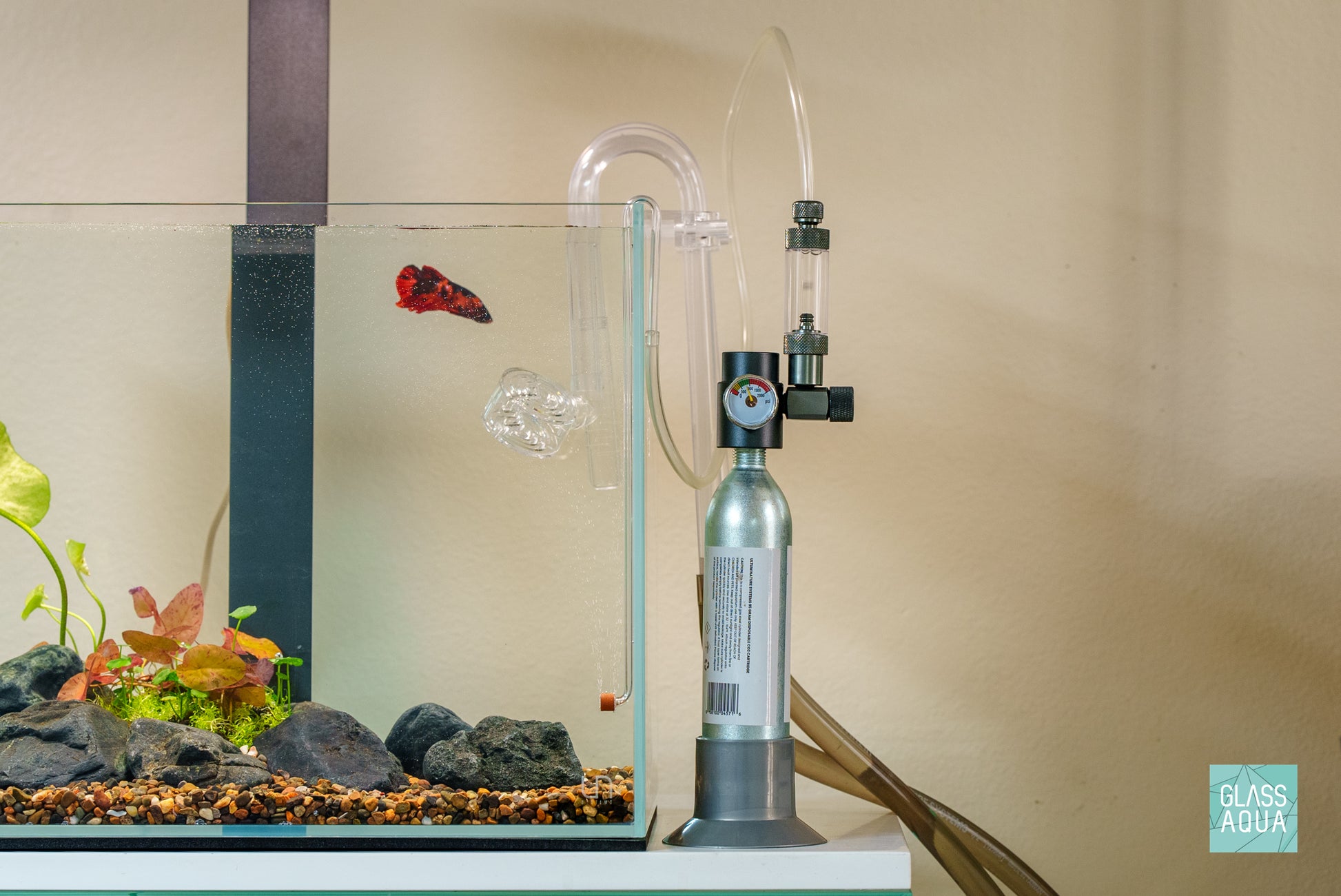
The Micro CO2 Kit is an all-in-one, beginner-friendly system designed for nano planted aquariums. Each set includes core components such as a regulator, solenoid, and disposable CO2 cartridge, providing a simple and controlled way to introduce CO2 into small aquarium systems.

Designed to be space-saving and easy to use, the Micro CO2 Kit is ideal for desktop and nano tanks where space is tight and simplicity is key.

What This Kit is Best For
- Nano planted aquariums (typically 1-10 gallons)
- Desktop and small space setups
- Beginners looking for a simple introduction to CO2
- Low to moderate plant demand tanks

Product Highlights
- Compact All-In-One Design: Includes essential components in a small footprint, making it ideal for tight spaces and nano aquariums
- Controlled Output: Features a dedicated regulator, solenoid, and bubble counter for more precise CO2 control compared to basic setups
- Beginner-Friendly Setup: Designed to be approachable and easy to install, even for those new to CO2 injection for planted aquariums
- Complete Starter System: Everything needed to begin CO2 injection in a nano planted aquarium is included in one kit

Ultum Nature Systems Micro CO2 Regulator Kit for Planted Aquarium Tanks

What’s Included
- UNS Micro CO2 Regulator
- UNS Micro CO2 Solenoid
- UNS Micro CO2 Bubble Counter
- Disposable CO2 Cartridge (95g)
- Cartridge Base Stand (color may vary)
- CO2 Tubing (color may vary)
- CO2 Diffuser

This kit is designed to make CO2 injection accessible for beginners and small aquarium setups. With proper installation, it provides a consistent source to support healthy aquatic plant growth.

Important Information
- Available for shipping within the lower 48 states

About The Brand

Ultum Nature Systems creates premium aquarium products designed by hobbyists, for hobbyists. Known for thoughtful design that first appeared in their line of rimless aquariums, they continue to move ground in the industry, with the health of your aquarium always at the forefront. Since the release, the brand has expanded into a variety of aquarium needs and everyday essentials that fuse form and function.

From best-selling substrates like Controsoil and Controsand to powerful filtration systems and nutrient-packed aquatic plant fertilizers for aquascapes at every stage, you're sure to find something you didn't know you needed. Jump further in and browse CO2 gear, various natural hardscape choices, then pick up some live aquatic plants and the tools you need to plant, maintain, and keep your tank looking its best. With a recent venture into the world of marine, UNS supports today's aquarium hobbyists every step of the way.

Inspired by nature and powered by the art of aquascaping, plan your next aquarium project with Ultum Nature Systems today.

Shop all UNS

Ultimate Planted Aquarium CO2 Guide

Adding CO2 to a planted tank might seem complicated at first—with all the gear and technical terms, it’s easy to feel overwhelmed. However, once you understand the basics, setting up a CO2 system for your planted tank is just as straightforward as setting up a filter or light. We’ll walk you through everything you need to know step-by-step.

Aquario Neo CO2 Diffuser Normal Large injecting micro CO2 bubbles

What is CO2 and why is it important in a planted aquarium?

Just as we need oxygen to survive, aquarium plants rely on carbon dioxide to thrive. CO2 is naturally produced by fish, humans, and other animals, providing plants with what they need. In a freshwater tank, fish naturally produce small amounts of CO2, which can give the impression that some aquatic plants don’t need it. In reality, all plants require it, just at different levels. This is why CO2 injection systems are strongly recommended—Popular beginner plants like Anubias, Bucephalandra, Java Fern and aquatic mosses are commonly labeled as “low-tech” because they can handle minimal levels. However, even hardy plants benefit greatly from added CO2 and will grow more quickly and vibrantly with it.

Aquascaper’s Notes: During photosynthesis (lights on), plants release oxygen, which helps keep the water well-oxygenated for livestock. As a result, most aquascapers skip traditional airstones or bubblers.

Easy beginner low light aquarium plant Java Fern Trident

Microsorum pteropus AKA Java Fern 'Trident' producing oxygen

Okay, so aquarium plants need CO2, but what does it really do?

For proper growth, aquatic plants require a balanced mix of light, nutrients and CO2. Think of it like a pie—each slice represents one of these elements. If any slice is too small, large or missing, the pie is incomplete and represents an imbalance aka ideal conditions for algae to take over. Injecting CO2 into a freshwater planted tank improves plant health, and stability. That’s why we recommend CO2 systems even in low-light or beginner-friendly tanks. It completes the pie, creates balance and reduces the risk of algae problems.

Common examples of planted aquarium imbalances:

  1. Too much light, but not enough CO2 or nutrients
  2. Too much nutrients, but not enough CO2

What equipment do I need to start injecting CO2?

The process is simple, once you understand must-have gear. Here are our four essentials every planted tank hobbyist should have.

1. CO2 Regulator

Controls overall output levels. Each regulator will have at least one gauge that will display the maximum output pressure. We typically set this anywhere between 25-40PSI (safe range) on the main valve and fine-tune the flow with the needle valve (the smaller one) to dial in levels being injected. Dual-gauge regulators show both working pressure and available gas reserves in the cylinder. Higher-end models may also include a solenoid. A solenoid lets you shut off CO2 manually or with a timer—usually synced with the lights, since aquarium plants will not require it when lights are off.

Shop UNS Mini CO2 Dual Stage Regulator CO2 - Glass Aqua
Almost all CO2 regulators will have a gauge that displays maximum output pressure
Shop UNS Pro CO2 Dual Stage Regulator CO2 - Glass Aqua
While other CO2 regulators will have dual gauges
Shop UNS Mini CO2 Dual Stage Regulator CO2 - Glass Aqua
Main pressure valve on an Ultum Nature Systems Mini CO2 Regulator
Shop UNS Mini CO2 Dual Stage Regulator CO2 - Glass Aqua
Needle Valve on an Ultum Nature Systems Mini CO2 Regulator
Ultum Nature Systems UNS Dual Gauge CO2 PRO Regulator for Planted Aquariums
CO2 Regulator solenoid example

2. Cylinders & Cartridges

These store CO2. How long do they last? This is one of the most common questions we get—and the honest answer is: it depends. Every aquarium is different. Factors like tank size, aquarium water chemistry, plant variety, plant density, and CO2 injection levels needed all impact how quickly a cylinder or cartridge is used up. Here are some guidelines:

  • Cartridges: Single use, compact and convenient. They are the perfect desktop solution for nano tanks between 1 - 8 gallons.
  • Paintball Cylinders: Budget-friendly option that is popular for convenience, size and ease of use. Most can be refilled at related hobby (paintball) stores. A great option for aquariums up to 20 gallons.
  • Standard CGA-320 Cylinders: Don’t let the name intimidate you! A CGA-320 is a North American standard that can be refilled at most welding, air-supply or local brewery shops. This is our top recommendation for all aquascapers who are invested in the planted tank hobby. This type of cylinder holds the most and will require less refills in between uses.
Planted Aquarium CO2 Injection Equipment

3. CO2 Diffuser

Delivers CO2 in the form of ultra-fine bubbles into the aquarium. Some aquarium airstones may look similar to CO2 Diffusers, but these aim to produce larger bubbles for surface agitation and gas exchange. The larger the bubbles, the more the aquarium will be oxygenated. CO2 needs to be easily dissolved in a planted aquarium, which means the smaller the bubbles, the better.

4. CO2-Proof Tubing

This is important. Normal airline tubing for aquariums cannot handle the higher pressure of CO2 systems. Specialized CO2 proof tubing is built to withstand pressurized CO2 and allows it to travel safely into an aquarium without leaks.

Ultum Nature Systems Pro CO2 Tubing | Planted Tank CO2 - Glass Aqua
Optional CO2 Equipment

1. Bubble Counter: Not required, but a helpful tool! Bubble counters provide a visual reference in the form of bubbles for how much CO2 is being injected into the tank. 

2. Drop Checker: This small glass accessory hangs on the rim of the tank or suctioned to a glass panel inside the aquarium. They typically include a liquid solution that changes colors based on the amount of CO2 injected.

Yellow means too much CO2, blue indicates too little, and green means the levels are just right. It can take a few hours following installation or a water change to change colors!

Ultum Nature Systems Micro CO2 Bubble Counter | CO2 - Glass Aqua
Ultum Nature Systems UNS CO2 Drop Checker

If you’ve read this far, we hope you now have a better grasp on planted aquarium CO2 injection. If you’re still not sure and a full setup feels like too much, we recommend starting out with a simple CO2 Kit. It’s easy to use, beginner-friendly and great for many tanks! But if you’re ready to make that leap and full send into CO2 injection, check out our bundled CO2 Kits at discounted prices. As always, if you have any questions, our team is always happy to help!

Shop Planted Tank CO2 Kits
Reviews by real customers

Overall rating: 4.904762 / 5 from 21 reviews.

AI Generated Review Summary

Summary topics

Review topics: [co2].

Review highlights

Reviews

it works great

"co2 works well for my nano tank"
alex s. (5/5)

Best micro co2 on the

"Best micro co2 on the market"

Anthony B. (5/5)

Simple, reliable option for nano aquarium

"Appropriately sized for my nano aquarium. Was easy to setup and worked without issue for a few months."

Matthew S. (5/5)

This is not only my first time with shrimp, but also with CO2.

"The micro is a learning curve for me. As mentioned before I somehow lost the pressure with the original cylender I bought 5 more and used a soapy water solution in a spray bottle to help me with the second and it did well for I believe three days , and tonight while working over the setup to put some additional plants in the bowl. I turned around and looked and guess what the second little cylender was empty. Now from what has been said, they should last at the very least two months. I have it set for about one bubble every second. Well it the second of my five bottles is on it now. I will see if I could have bumped the little adjustment knob and ran it out fast, I dont know. Doest seem as if my little shrimp was affected by a load of too much CO2 going in the little bowl."

Eddie M. (4/5)

Very clean and easy to set up!

"This was very easy to set up and get going! Plus, the diffuser it came in was very nice. Everything looks very aesthetic as well :)"

Angela Y. (5/5)

As expected

"Product was functional and as described."

Nicholas R. (5/5)

Good!

"Great for my nano tank!"

Holly E. (5/5)

Perfect for a nano tank

"I bought this to replace a cheaper CO2 system on a nano tank. Quality is what you would expect and its nice to have a bubble counter for a change."

Bicknell R. (5/5)

UNS CO2 -refill

"great product! works great with the UNS mini regulator."

Jennifer R. (5/5)

Works great!

"Works great!"

Gary C. (5/5)

Q&A

What is the difference between the Mimi and micro? The chart states they are both for 2-10 gallon tanks. I will be setting up a 5 gallon planted tank.
I had the same question. Here's what my research has uncovered: I believe the difference between the Nano (Mini) and the Micro CO2 kit is that the Nano can be fitted to different CO2 tanks sizes (cylinder, paintball or disposable cartridge) while the Micro regulator will only fit on the disposable cartridge. The Nano regulator has a separate control nob to turn flow on or off while the Micro is controlled through the flow nob that is attached to the solenoid that comes with the kit. The Nano doesn't come with a solenoid from what I can see, although it looks like you can add one if wanted. From what I can see, the added cost of the Nano/Mini over the Micro is for the option of using the regulator that can fit multiple canister sizes. The kits do save a few $$ over buying each component separately. I have bought a second Micro kit, but found the disposable CO2 cartridge has a tendency to discharge while being screwed onto the regulator. This is due to it not having it's own on/off valve. If I were to do it over again, I'd probably go with the Nano kit without the disposable cartridge and invest in a refillable paintball CO2 can.
Shipping, Returns and Refunds

Shipping
Orders are typically processed within 1-2 business days M-F. However, additional time may be required during peak seasons and federal holidays. For orders containing live plants, we exercise extra caution and assess factors such as travel distance and weather to ensure safe transit.

To avoid delays, please ensure all order information is accurate and complete. We cannot offer refunds and are not responsible for orders shipped to incorrect addresses due to errors in provided information. Once an order has been shipped, delivery times are determined by the carrier and are outside of our control. On average, shipments arrive within 2–5 business days, excluding weekends and holidays. For more information, please visit our FAQ page.

Returns
If you are not satisfied with your purchase, please contact us within 48 hours of delivery. Approved returns must be shipped back within 14 days of approval. Returned items must be unused, unopened, and in their original packaging. Specific return requirements, if applicable, will be listed on the product’s page. For more information, please visit our FAQ page.

Refunds
No worries, we’ll take care of everything as long as it fits the guidelines above.Most answers to general questions can be found on our FAQ page.